


African Swine Fever Simulation Exercise
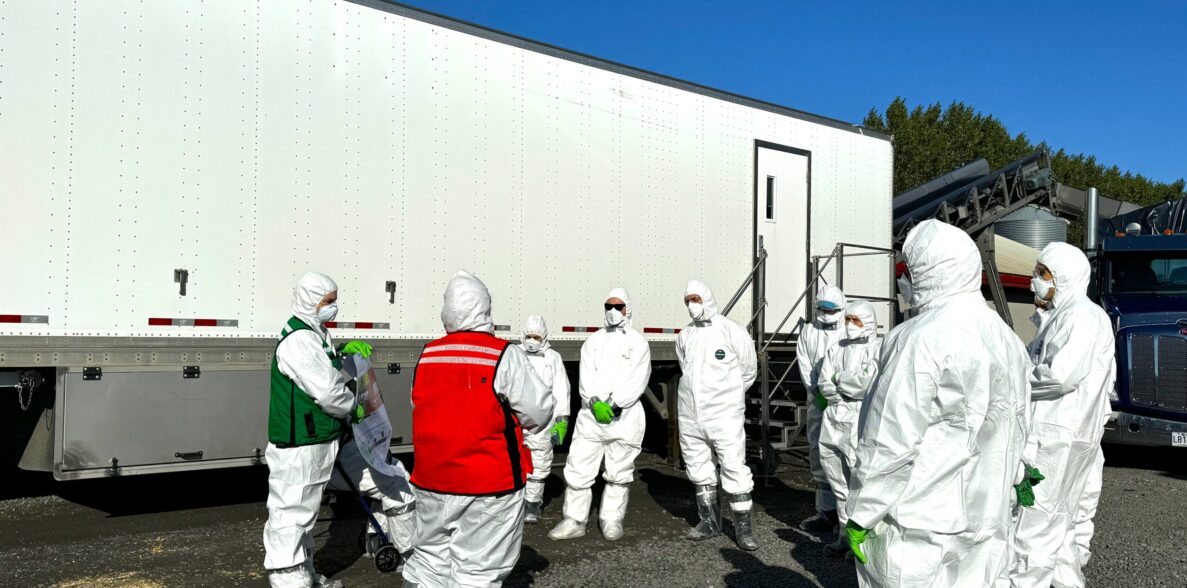
The Quebec Swine Health Team (EQSP) organized an in-person intervention simulation exercise to address the threat of the global spread of African swine fever, with the aim of improving the preparedness and response effectiveness of animal health authorities from the federal and provincial governments and partners in the Quebec pork sector
The exercise was conducted on October 16 and 17, 2024 to test sampling, biocontainment and biosecurity practices, and strategies for depopulation and disposal of infected carcasses. About a hundred people from different entities and members of the regional and national industry went to a swine site in Monteregie region, where the practical and theoretical methods developed in the emergency measures plan were applied, in collaboration with the Canadian Food Inspection Agency, the Ministère de l’Agriculture, des Pêcheries et de l’Alimentation du Québec (MAPAQ) and the Ministère de l’Environnement, de la Lutte contre les changements climatiques, de la Faune et des Parcs (MELCCFP).
This exercise is part of a large-scale simulation exercise currently underway and includes the notification plan, the epidemiological investigation, the assessment of the issuance of permits and the communication plans.
“A simulation exercise is a supervised activity that simulates a situation that could occur in real life, for the purposes of training, capacity assessment and testing of action plans. Conducting simulation exercises offers many benefits:
- It helps to reveal the strengths of emergency plans and procedures, as well as their shortcomings and areas for improvement;
- It allows stakeholders to become familiar with these plans and procedures;
- It gives participants the opportunity to practice their roles and make decisions, by providing them with a safe environment that is not constrained by the emergency;
- It encourages interactions and networking with other services, stakeholders or countries.”
Source: 2024, WOAH. Terrestrial Animal Health Code